Introduction
In the fast-moving world of electronics, printed circuit boards (PCBs) quietly power nearly everything around us—from smartphones and smart homes to satellites and industrial robots. Yet behind every reliable electronic device lies a manufacturing process that demands precision, speed, and consistency. That’s where eurocircuits enters the picture.
Engineers and hardware startups often face a familiar dilemma: they need prototypes quickly, but quality can’t be compromised. Waiting weeks for PCB fabrication can stall innovation entirely. Luckily, modern manufacturing services have evolved to remove that bottleneck. Companies specialising in rapid PCB production have changed how engineers design, test, and launch electronic products.
Among these services, eurocircuits has become widely recognised for simplifying PCB production. By combining automated checks, transparent pricing, and streamlined fabrication, it has helped developers move from design to working boards much faster. Whether someone is building a prototype in a small workshop or producing boards for a global product line, efficient PCB fabrication has become essential.
The Rise of PCB Manufacturing in Modern Electronics
Electronics today are smaller, faster, and far more powerful than devices built even a decade ago. This progress hasn’t happened by accident; it’s the result of massive improvements in circuit design and manufacturing technology. PCBs are the backbone that allows electronic components to communicate with precision and stability.
Manufacturers once relied heavily on manual fabrication methods that were slow and prone to human error. Designers had to double-check layouts repeatedly, hoping the final board would match their expectations. If a mistake slipped through, the entire production batch might fail, costing time and money.
Modern automated fabrication systems have dramatically improved reliability. Advanced software analyses circuit layouts before production begins, flagging potential issues such as spacing violations or incorrect drill sizes. These digital checks have shortened development cycles and helped engineers bring new products to market more quickly.
Why Engineers Trust eurocircuits for Prototyping
When engineers design a new device, they rarely get everything right on the first attempt. Prototyping is a trial-and-error process that requires quick revisions and multiple PCB iterations. The faster a prototype arrives, the sooner designers can test and improve their work.
This is where eurocircuits gained popularity among hardware developers. Instead of complex ordering systems and unpredictable pricing, engineers can upload their design files and receive instant feedback about manufacturability. If the layout contains problems, automated checks identify them immediately.
That kind of transparency removes guesswork from the process. Designers know what adjustments to make before the board enters production, reducing costly mistakes. As a result, teams can focus more on innovation and less on troubleshooting manufacturing errors.
How PCB Fabrication Technology Has Evolved
PCB fabrication has come a long way from the early days of electronics workshops filled with etching chemicals and manual drilling tools. Today’s fabrication plants operate with highly automated equipment capable of producing extremely fine traces and multilayer boards.
High-resolution imaging systems now transfer circuit patterns onto copper layers with remarkable precision. Chemical etching removes excess copper while leaving the desired circuit pathways intact. Afterward, layers are laminated together to create complex boards capable of supporting advanced processors and high-speed communication chips.
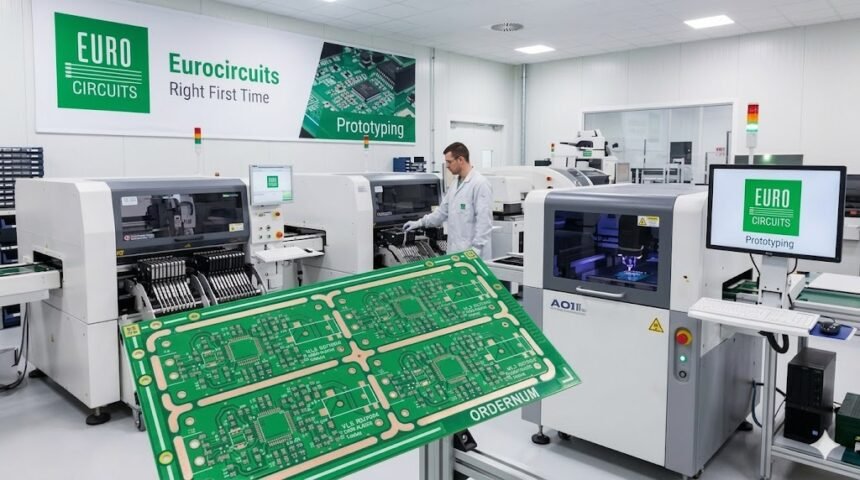
Testing has improved just as dramatically. Automated optical inspection machines scan finished boards for defects that might escape the human eye. Electrical testing verifies connectivity across the circuit, ensuring that every trace behaves exactly as the designer intended.
eurocircuits and the Push Toward Faster Hardware Development
Speed has become a defining factor in hardware innovation. Software developers can release updates in minutes, but hardware teams traditionally had to wait weeks for new prototypes. That delay slowed experimentation and made product development far less flexible.
Companies like eurocircuits helped change that mindset by prioritising rapid turnaround times. Designers can now receive boards in just a few days, enabling quicker testing cycles. This acceleration has been especially important for startups and small teams trying to compete in crowded technology markets.
With faster iteration cycles, engineers can experiment more freely. Instead of worrying about long delays between prototypes, they can test new circuit ideas almost immediately. That freedom encourages creativity and leads to better product designs.
Key Advantages of Modern PCB Production
Before diving into technical comparisons, it’s worth understanding why modern PCB manufacturing services have become so attractive to engineers and product teams alike.
- Rapid prototyping speeds that allow engineers to test designs quickly
- Automated design rule checks that reduce manufacturing errors
- Transparent pricing models that simplify budgeting for projects
- High‑precision fabrication suitable for advanced electronics
- Reliable turnaround times that keep development schedules on track
- Scalable production from prototypes to large batches
These advantages have fundamentally reshaped how electronics products move from concept to market.
Essential Design Considerations for PCB Engineers
Designing a circuit board might seem straightforward at first glance, but countless technical details influence whether the final board performs reliably.
- Trace width and spacing: Proper spacing prevents electrical interference and overheating.
- Layer stack configuration: Multilayer boards require careful planning to separate power, ground, and signal layers.
- Component placement: Poor placement can lead to heat issues or signal degradation.
- Signal integrity management: High‑speed signals demand controlled impedance and careful routing.
- Thermal design: Power components must dissipate heat effectively to avoid failures.
- Manufacturing compatibility: Designs must follow fabrication limits to ensure accurate production.
Even small adjustments in these areas can significantly affect performance and reliability.
Comparing Traditional PCB Production vs Modern Methods
| Feature | Traditional PCB Production | Modern Automated Production |
|---|---|---|
| Turnaround Time | Often several weeks | As fast as a few days |
| Error Detection | Mostly manual checks | Automated design verification |
| Cost Transparency | Variable quotes | Instant pricing systems |
| Design Feedback | Limited until production | Immediate manufacturability checks |
| Scalability | Difficult for small batches | Easy transition from prototype to volume |
| Precision | Moderate trace resolution | High‑precision micro‑traces |
These improvements highlight how dramatically PCB manufacturing has advanced over the years.
How eurocircuits Supports Engineers Worldwide
Automated Design Validation
One of the most appreciated features engineers encounter when working with eurocircuits is automated design analysis. Uploading a PCB file triggers a detailed inspection process that checks spacing rules, drill sizes, and other manufacturing limits.
Instead of discovering problems after fabrication, designers receive instant feedback. That early detection dramatically reduces production delays and ensures the board can be manufactured successfully.
Transparent Production Workflow
Another reason engineers appreciate this system is visibility. Designers can track production stages and understand exactly how their boards move through fabrication. That level of clarity builds trust between manufacturers and development teams.
For hardware startups especially, predictable production timelines can make the difference between meeting a launch deadline and missing it entirely.
Rapid Prototyping Infrastructure
Speed is arguably the most celebrated aspect of modern PCB services. Prototypes produced quickly allow teams to test ideas, revise circuits, and push projects forward without waiting weeks for each iteration.
The result? Faster innovation cycles and products that reach consumers sooner.
Challenges in PCB Manufacturing Today
Despite impressive technological progress, PCB manufacturing still faces several challenges that engineers must consider carefully. Electronics are becoming more compact and powerful, which means circuit boards must handle higher signal speeds and tighter component spacing.
These design pressures make manufacturing far more complex. Tiny trace widths and dense layouts increase the risk of signal interference or heat buildup. If designers overlook these details, performance problems may appear once the device is assembled.
Supply chain stability is another challenge. Global electronics demand continues to rise, and manufacturing facilities must maintain consistent production capacity while ensuring strict quality control standards.
The Future of PCB Manufacturing and Innovation
The future of electronics manufacturing looks incredibly exciting. Emerging technologies like artificial intelligence, electric vehicles, and advanced robotics require sophisticated circuit boards capable of handling enormous processing power.
As these industries grow, PCB manufacturing will continue evolving. Automation will likely become even more intelligent, using machine learning to identify potential design flaws before fabrication begins. Engineers may eventually receive real-time recommendations while designing their circuits.
Sustainability will also play a major role in future production methods. Manufacturers are exploring environmentally friendly materials and energy‑efficient fabrication processes to reduce the environmental footprint of electronics production.
Frequently Asked Questions
What is eurocircuits used for?
It is commonly used for PCB fabrication and rapid prototyping, helping engineers turn circuit designs into working boards quickly.
How fast can PCB prototypes be produced?
Many modern fabrication services can deliver prototypes within a few days, depending on complexity and production schedules.
Why is rapid prototyping important in electronics?
Quick prototypes allow engineers to test designs, identify problems early, and refine products faster before moving into full production.
Are automated PCB design checks necessary?
Yes, automated checks help detect spacing errors, incorrect drill sizes, and other issues that could cause manufacturing failures.
Can PCB prototypes be scaled to mass production?
Absolutely. Most modern fabrication services allow designers to transition from prototype batches to full-scale manufacturing with minimal changes.
Conclusion
Modern electronics wouldn’t exist without reliable PCB manufacturing, and innovation continues to accelerate as fabrication technology improves. From automated design checks to rapid prototype delivery, services like eurocircuits have simplified the path from idea to working device. Engineers now enjoy faster development cycles, better manufacturing transparency, and fewer costly errors. As electronics become more advanced, efficient PCB production will remain a cornerstone of technological progress. Quite simply, behind every smart device lies a carefully crafted circuit board and the systems that make it possible.