
Introduction
Ever opened a “committee report” expecting dry, robotic pages… and still felt your stomach tighten?
Yeah. Because reports like Internal+complaints+committee+report+2014-2020+central+university+of+kashmir aren’t just files that sit on a server. They’re a snapshot of how an institution behaves when someone says: “Something’s wrong, and I’m not okay.” And that’s not academic trivia—it’s the heartbeat of safety, trust, and dignity on campus.
Now, quick reality check: the public internet is messy. You’ll find blog posts, re-posts, paraphrases, and “SEO pages” that sound official when they’re not. So in this article, I’m not going to pretend I’ve got private case files in my pocket. What I can do is walk you through what an Internal Complaints Committee (ICC) report covering 2014–2020 typically tries to capture, why those years can feel like a pressure cooker for institutions, and how to read between the lines without turning into a conspiracy detective.
And yes—there’ll be plain talk, a few “wait, what?” moments, and a bit of storytelling. Because this topic deserves a human voice.
What an Internal Complaints Committee report is, in plain English
An Internal Complaints Committee (often called an Internal Committee under the law) is tied to India’s Sexual Harassment of Women at Workplace (Prevention, Prohibition and Redressal) Act, 2013 (commonly known as the POSH Act).
Higher educational institutions also fall under the UGC Regulations, 2015, which spell out responsibilities and processes for preventing and addressing sexual harassment complaints.
So what’s the report for?
Think of it like this: the report is a structured “memory” of the system.
Not names and gossip. Not juicy details. More like:
-
how many complaints came in (sometimes grouped by category)
-
how many were taken up for inquiry
-
how many were resolved, withdrawn, or sent elsewhere
-
what awareness sessions happened (workshops, posters, orientations)
-
what policy improvements were recommended
A decent report also signals how confident the institution is about transparency. Too vague? People feel shut out. Too detailed? Privacy gets harmed. It’s a tightrope walk, honestly.
Why 2014–2020 is a loaded timeline (and not just “six years”)
Here’s the thing: the years 2014–2020 are not one smooth, calm stretch.
-
The legal framework is alive and evolving in campuses, especially after POSH 2013 and the UGC 2015 regulations.
-
Universities across India spent years figuring out training, membership composition, procedures, and “what do we do when a complaint hits the door at 4:55 PM on a Friday?”
-
Then 2020 arrives with disruption—remote communication, institutional delays, and new barriers to reporting.
So a report that spans these years can feel like a long hallway: you don’t just see doors, you see the changing lighting too.
A quick note about the Central University of Kashmir and ICC visibility
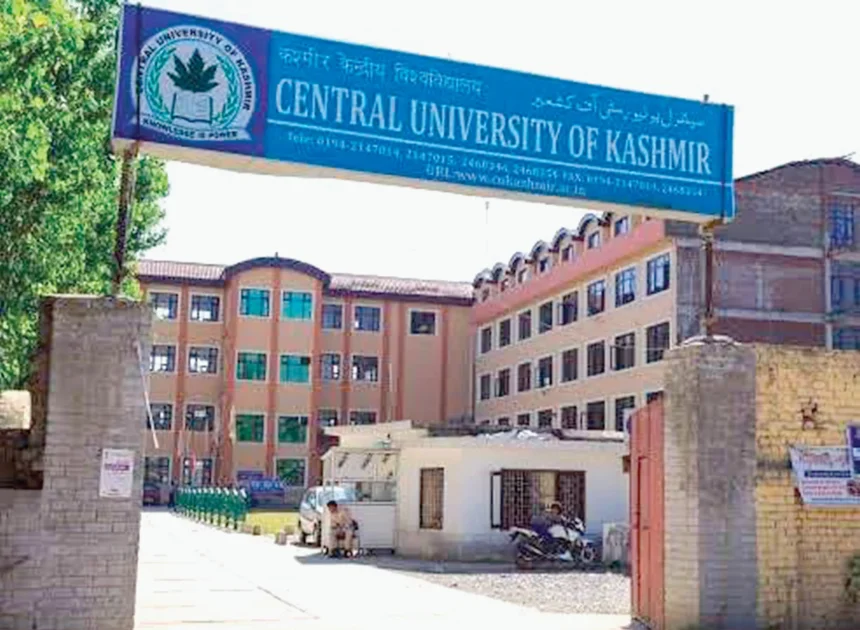
The Central University of Kashmir’s official site lists “Internal Complaints Committee” among its initiatives/links, which suggests the mechanism exists as part of its administrative structure.
That matters because, for any ICC system to work, people need to know it exists. Visibility is half the battle. If students and staff can’t find the process, that process becomes a myth.
Reading Internal+complaints+committee+report+2014-2020+central+university+of+kashmir like a real person (not a robot)
Let’s imagine you’re reading Internal+complaints+committee+report+2014-2020+central+university+of+kashmir and you’re trying to make sense of it without spiraling. Here’s a grounded way to approach it.
1) Start with the purpose, not the numbers
People jump straight to “how many complaints?” because it feels measurable.
But a low number can mean two opposite things:
-
a safer environment (possible)
-
fear, stigma, lack of awareness, or distrust (also possible)
So the better first question is: What does the report say about access and awareness?
Were orientations conducted? Were posters placed? Were staff trained? Was there a clear email/portal? Those clues tell you whether the system was reachable.
2) Watch how “resolution” is described
Some reports use soft language like:
-
“matter disposed”
-
“issue addressed”
-
“case closed”
That’s not automatically shady—privacy rules can limit detail. But it can make people uneasy. A strong report usually clarifies the types of outcomes without exposing anyone’s identity.
3) Look for pattern language
Even if details are withheld, you may notice recurring phrases:
-
“counselling suggested”
-
“inquiry conducted”
-
“recommendations submitted to competent authority”
-
“awareness programme conducted”
If these appear year after year, you can ask: did anything improve, or is the institution stuck in repeat mode?
4) Track time-to-action signals
Sometimes the most important detail isn’t “how many,” it’s “how long.”
If a report signals delays—lack of quorum, procedural bottlenecks, or slow follow-through—that’s where trust breaks. The POSH Act lays out process expectations and institutional responsibilities.
What strong ICC reporting usually includes (and what feels missing when it doesn’t)
Here’s a practical checklist—nothing fancy, just real-world useful.
Strong report signals
-
Clear explanation of how to file a complaint (step-by-step)
-
Confidentiality language that feels protective, not threatening
-
Year-wise activity summary (meetings, trainings, awareness drives)
-
Outcome categories explained without exposing identities
-
Process transparency (how inquiry panels work, what timelines are followed)
-
Recommendations for policy, training, campus safety
Weak report signals
-
Purely generic text with zero “how it works”
-
Only celebratory language, no friction points
-
No sense of what changed from 2014 to 2020
-
A “trust us” vibe with no supporting structure
And honestly? People can smell a “trust us” vibe from miles away.
The human side: why people hesitate to report (even when a committee exists)
Dangling in the air, the big question: If there’s an ICC, why wouldn’t someone use it?
Because reporting isn’t a neat little administrative act. It’s emotional, risky, and exhausting.
Common reasons people hesitate:
-
“What if this blows back on my grades/job?”
-
“What if everyone finds out?”
-
“What if I’m not believed?”
-
“What if it becomes a never-ending inquiry?”
-
“What if the person is powerful?”
That last one? Whew. That’s where institutions get tested. Not in easy cases, but in uncomfortable ones.
The UGC Regulations exist for a reason: to push institutions into responsible structures instead of informal cover-ups.
Turning reports into real change: what campuses can do without waiting for a crisis
If you’re reading a report and thinking, “Okay, but what now?”—fair.
Here are practical moves that don’t require a dramatic scandal to “justify” them:
A. Make reporting pathways simple (and visible)
-
a clear webpage
-
a dedicated email address
-
a short, non-scary “how to file” guide
-
posters in common areas (yes, they still work)
B. Train people like adults, not like they’re ticking boxes
Workshops shouldn’t be sleepy PowerPoints. Use scenarios, role clarity, and real policy walkthroughs.
C. Protect complainants from retaliation
Even the fear of retaliation kills reporting. Institutional messaging must be firm: retaliation won’t be tolerated. The POSH Act framework supports structured inquiry and institutional responsibility.
D. Create an annual “what changed” page
No names, no case details—just improvements:
-
policy updates
-
training counts
-
new reporting channels
-
timeline improvements
People trust movement. Silence looks like stagnation.
A mini “field guide” to questions you can ask after reading the report
If you’re a student, staff member, journalist, or researcher, these questions keep you grounded:
-
How easy is it to file a complaint, step-by-step?
-
Does the report describe awareness work that happened regularly?
-
Are outcomes described in understandable categories?
-
Is the committee’s existence clearly visible on official channels?
-
Do the report’s recommendations sound practical, or just decorative?
-
Do you see improvement year-to-year, or a copy-paste loop?
FAQs
1) What is the ICC supposed to handle in a university setting?
Primarily complaints related to sexual harassment within the institution’s scope, following the POSH Act and relevant regulations.
2) Is an ICC report supposed to reveal case details and names?
No. Privacy is a core concern. Reports usually summarize actions and outcomes without identifying people.
3) If complaint numbers are low in a report, does that mean the campus is safe?
Not automatically. Low numbers can reflect safety—or fear, low awareness, or distrust. You have to read the surrounding context.
4) Why do UGC Regulations matter when the POSH Act already exists?
The UGC Regulations focus on higher educational institutions and add structure and expectations for campuses, complementing the POSH framework.
5) How can someone verify official ICC information for a university?
Start with the university’s official website and administrative pages listing initiatives and committees.
Conclusion
A report like Internal+complaints+committee+report+2014-2020+central+university+of+kashmir sits at a strange crossroads: it’s administrative, yet deeply personal in what it represents. It can’t carry every detail, and it shouldn’t. Still, it can show whether the institution is building a system people can actually trust.
Read it like a human. Look for access, clarity, change over time, and the courage to name challenges without turning them into PR confetti. When that happens, the report stops being “paperwork” and starts behaving like something rarer—an institutional promise that’s trying to keep itself.



