Introduction
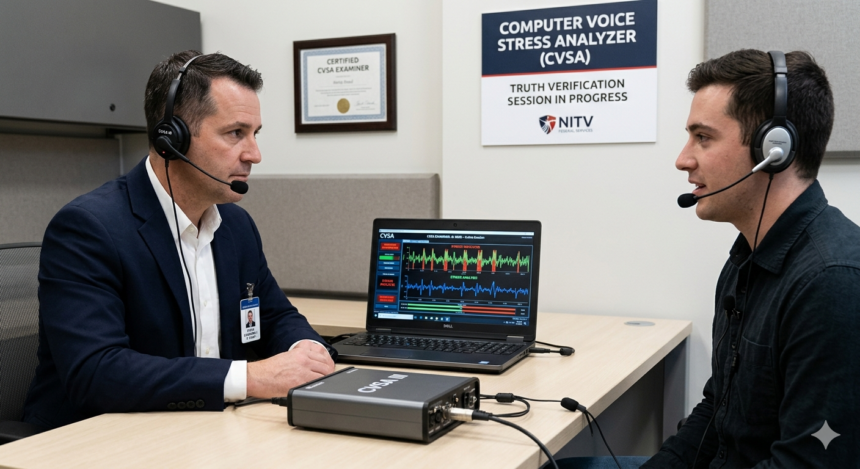
Ever heard someone say, “I can tell they’re lying just by their voice”? Sounds a bit dramatic, right? Well, that idea actually inspired technologies like the CVSA Lie Detector, a system designed to analyse voice patterns and detect possible stress linked to deception.
But here’s where it gets interesting. Unlike what you see in movies with dramatic wires and blinking machines, this tool works quietly in the background, analysing subtle vocal changes. Still, the big question remains can it really tell when someone is lying? Let’s dig deeper and find out what’s real, what’s misunderstood, and what’s still up for debate.
The Rise Of Voice-Based Truth Detection Tools
Back in the day, lie detection was all about physical reactions—sweaty palms, racing hearts, shaky voices. But as technology evolved, so did the methods. Enter voice-based analysis systems.
The idea behind CVSA Lie Detector technology is simple in theory: stress in the human voice may indicate deception. While it doesn’t directly “catch lies,” it identifies vocal stress patterns that may suggest emotional pressure. And that’s where things start to get interesting.
How Modern Voice Analysis Systems Work
To understand this better, let’s break it down. Voice stress analysis tools don’t actually listen to what you say—they focus on how you say it.
They examine micro-tremors in the voice, fluctuations in tone, and changes in frequency. These subtle signals are then processed through algorithms that attempt to identify stress indicators. It’s a bit like trying to read between the lines, but with sound waves instead of words.
Why Law Enforcement Shows Interest In It
Law enforcement agencies are always looking for tools that can help them gather information faster. That’s where systems like CVSA Lie Detector come into play.
Instead of relying solely on traditional interrogation techniques, investigators can use voice analysis as an additional layer. It’s not meant to replace human judgment but to support it. And in fast-paced investigations, every bit of insight counts.
Core Features That Define Voice Stress Analysis
Some features make this technology stand out, even if it remains controversial.
- Detects vocal stress patterns in real time
- Requires only a recorded voice sample
- Non-invasive and simple to use
- Works alongside traditional interrogation methods
These features make it appealing for professionals looking for quick analytical support.
Comparing CVSA And Traditional Polygraph Testing
| Feature | CVSA Technology | Polygraph Testing |
|---|---|---|
| Measurement Basis | Voice stress patterns | Heart rate, breathing |
| Physical Setup | Minimal equipment | Multiple sensors |
| Invasiveness | Non-invasive | Moderately invasive |
| Accuracy Debate | Highly debated | Also debated |
| Usage Context | Investigations | Legal & investigative use |
While both tools aim to detect deception, they approach it from very different angles.
Common Misconceptions People Often Believe
There’s a lot of confusion surrounding voice stress technology. Some think it can directly detect lies, but that’s not quite accurate.
- It does not “read minds”
- It cannot guarantee truth detection
- It may misinterpret emotional stress
- It should not be used as sole evidence
Understanding these limitations is important before forming conclusions.
Understanding The Science Behind Vocal Stress
Micro Tremors In The Voice
Tiny vibrations in vocal cords may change under stress.
Emotional Pressure Indicators
Fear or anxiety can affect tone and speech rhythm.
Signal Processing Techniques
Software analyses frequency shifts in recorded speech.
Interpretation Challenges
Results depend heavily on context and human evaluation.
Where CVSA Technology Is Commonly Used
This type of technology isn’t just limited to law enforcement. It appears in several areas where understanding human responses is important.
It is sometimes used in interviews, security screenings, and investigative settings. However, its usage varies widely depending on legal frameworks and organisational policies.
Challenges And Criticism Surrounding The Technology
Not everyone agrees on the effectiveness of voice stress analysis. Critics argue that emotional stress doesn’t always equal deception.
For example, someone might feel nervous for completely innocent reasons. That can lead to false interpretations. Because of this, many experts suggest using it only as a supportive tool rather than a definitive one.
Ethical Questions Around Its Usage
Technology that tries to interpret human truth naturally raises ethical concerns. Privacy, consent, and accuracy all come into play.
Is it fair to judge someone based on stress in their voice alone? Should such tools influence important decisions? These questions continue to spark debate among professionals.
Tips For Understanding Lie Detection Tools Better
If you’re curious about technologies like this, it helps to keep a balanced perspective.
- Don’t assume results are 100% accurate
- Understand the role of human interpretation
- Learn about limitations before trusting outputs
- Consider emotional context of conversations
A little awareness goes a long way in avoiding misconceptions.
Real World Limitations You Should Know
Even though the concept sounds advanced, real-world usage comes with limitations. Background noise, recording quality, and emotional variability can all affect outcomes.
Moreover, no scientific consensus fully supports voice stress analysis as a foolproof method. That’s why experts often recommend combining it with other investigative tools.
Frequently Asked Questions
What is CVSA Lie Detector used for?
It is used to analyse voice stress patterns that may indicate emotional pressure during speech.
Can it actually detect lies?
Not directly. It detects stress, which may or may not be linked to deception.
Is it scientifically proven?
Its effectiveness is debated among experts and not universally accepted.
Where is it commonly used?
It is mainly used in investigative and screening contexts.
Can it replace polygraph tests?
No, it is generally used as a complementary tool rather than a replacement.
Conclusion
In the end, the CVSA Lie Detector represents an interesting blend of psychology and technology, aiming to uncover hidden emotional signals through voice analysis. While it offers intriguing possibilities, it’s far from perfect or foolproof. Like many tools in the world of investigation, it works best when used alongside human judgment rather than replacing it. As technology evolves, so will our understanding but for now, a healthy dose of skepticism is always a smart move.