Introduction
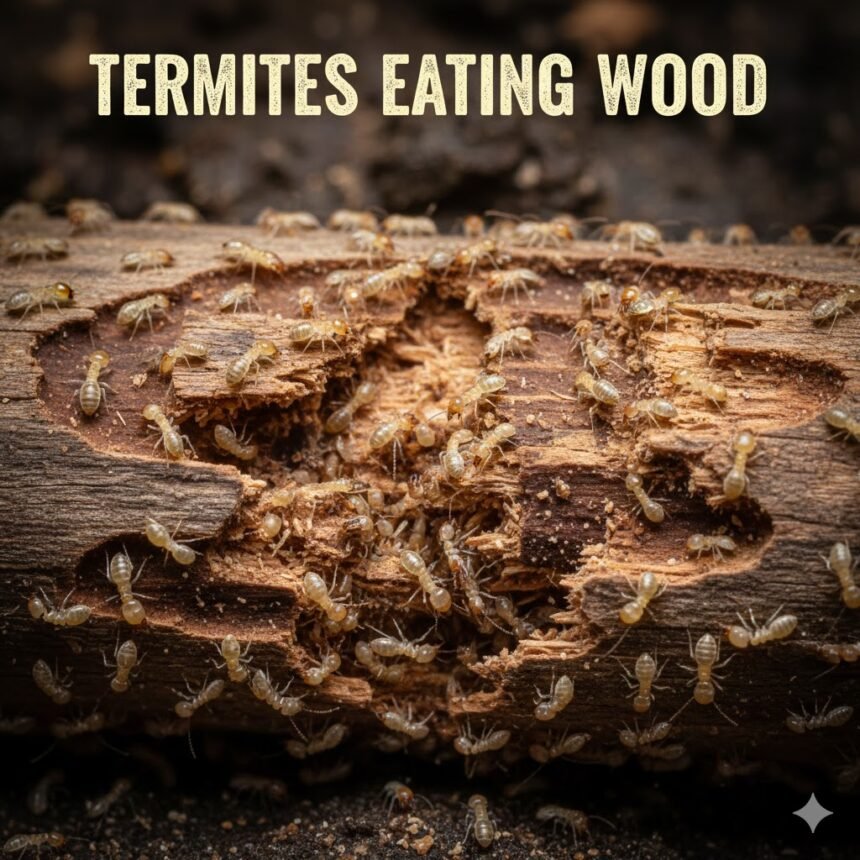
Ever noticed tiny holes in your wooden furniture or weirdly hollowed floorboards and wondered, “What on earth is doing this?” That’s probably the work of termites those unassuming yet relentless little insects. When it comes to termites eating wood, what seems like a minor nuisance can quickly spiral into a major structural problem if ignored. These insects have been around for millions of years, quietly munching through cellulose, and leaving homeowners, builders, and nature enthusiasts both fascinated and frustrated.
In this deep dive, we’ll uncover why termites eat wood, how they do it, the signs of infestation, and what you can do to protect your home. From their social structure to the surprisingly ecological benefits they bring, this article is your ultimate look at the tiny but mighty wood‑destroyers.
What Are Termites and Why Do They Eat Wood?
Termites are small insects, often mistaken for ants, that feed primarily on cellulose — the main component of wood. But why are they so obsessed with wood?
| Factor | Explanation |
|---|---|
| Dietary Needs | Termites require cellulose for energy and growth, which wood provides abundantly. |
| Digestive Adaptation | They have gut microbes that help break down cellulose into digestible nutrients. |
| Habitat Preference | Wood offers both food and shelter, making it an ideal living environment. |
| Colony Survival | Eating wood ensures the colony has enough resources to grow and thrive. |
In essence, termites eating wood is less about malice and more about survival. Nature designed them to digest what humans consider furniture, floors, and support beams — a classic case of nature’s priorities versus ours!
How Termites Eat Wood: The Mechanics
You might wonder, how do such tiny creatures chew through solid wood? The process is a combination of teamwork, biology, and persistence.
- Worker Termites Take the Lead – These industrious members of the colony are the ones gnawing away at cellulose.
- Saliva and Microbes – Termites produce saliva loaded with enzymes and rely on symbiotic gut microbes to break down tough cellulose fibers.
- Continuous Feeding – They don’t stop at one spot; termites carve tunnels and galleries, gradually hollowing out entire pieces of wood.
- Social Distribution – Once digested, nutrients are shared with the queen, soldiers, and nymphs, keeping the colony alive and thriving.
The fascinating part? Even the smallest termite can eat an amount equivalent to its body weight daily if conditions are right!
Signs of Termites Eating Wood
Spotting a termite problem early is crucial because these insects often work silently behind the scenes. Here are telltale signs:
| Sign | Description |
|---|---|
| Hollow Sounding Wood | Tapping furniture or floors may produce a hollow sound due to internal tunneling. |
| Mud Tubes | Termites build protective mud tubes along walls and foundations to travel safely. |
| Frass (Termite Droppings) | Tiny wood-colored pellets near wooden structures are a clear warning sign. |
| Blistered Wood or Paint | Wood that looks warped or paint that’s bubbling could indicate termites underneath. |
| Swarms of Winged Termites | Seeing winged termites indoors or around windows is often a signal that a colony has matured. |
By recognizing these signs early, homeowners can prevent catastrophic damage.
Whether they’re tunneling through furniture or hollowing out beams, all these species contribute to the phenomenon of termites eating wood.
Ecological Role of Termites
It’s easy to hate termites for destroying furniture, but in the wild, they play a surprisingly crucial role.
- Soil Aeration – Their tunneling activity improves soil structure and water penetration.
- Nutrient Recycling – Termites break down tough cellulose, returning nutrients to the ecosystem.
- Food Source – Birds, reptiles, and mammals rely on termites as a critical protein source.
- Forest Health – By decomposing dead trees, termites prevent accumulation of dry litter, reducing fire hazards.
So while they’re pests in your home, they’re little eco‑heroes in nature!
Preventing Termites From Eating Wood in Your Home
Stopping termites before they start munching through your house requires diligence. Here are practical strategies:
- Remove Moisture Sources – Fix leaks, keep basements dry, and ensure proper ventilation.
- Store Wood Properly – Keep firewood and lumber away from foundations.
- Seal Cracks and Openings – Block potential entry points with caulk or metal screens.
- Use Treated Wood – Pressure-treated or chemically-treated wood deters termites.
- Regular Inspections – Professional pest control checks catch infestations early.
Common Myths About Termites Eating Wood
| Myth | Truth |
|---|---|
| Only dirty or old houses get termites | Even brand-new, well-kept homes can fall victim. |
| Termites eat anything wooden instantly | They feed slowly, often unnoticed for years. |
| Termites can be stopped by regular sprays | DIY sprays help minimally; professional treatment is more effective. |
| Termites only affect furniture | They can compromise structural wood, beams, and flooring. |
Understanding these myths prevents homeowners from underestimating the threat.
FAQs
Q: Can I see termites eating wood with the naked eye?
A: Yes, worker termites are visible, but they mostly stay hidden inside wood or tunnels.
Q: How fast can termites destroy a wooden structure?
A: Depending on the species and colony size, significant damage can occur in just a few years.
Q: Are there natural repellents for termites?
A: Some essential oils, like orange oil or neem oil, may help deter them, but professional intervention is often necessary.
Q: Can I prevent termites by just keeping my home clean?
A: Cleanliness alone isn’t enough; controlling moisture and wood contact is more effective.
Q: Do termites attack all types of wood equally?
A: No, softer woods are more vulnerable, while some hardwoods and treated woods resist infestation.
Conclusion
The world of termites eating wood is both fascinating and destructive, showcasing nature’s power in miniature form. While they quietly chew through cellulose for survival, their activity can wreak havoc on homes if left unchecked. Understanding their behavior, recognizing early warning signs, and implementing preventive measures are key to staying protected. Yet in natural ecosystems, these tiny insects play an essential role in nutrient recycling and maintaining environmental balance. Respecting their ecological importance while defending your property is the perfect balance between fascination and caution.